
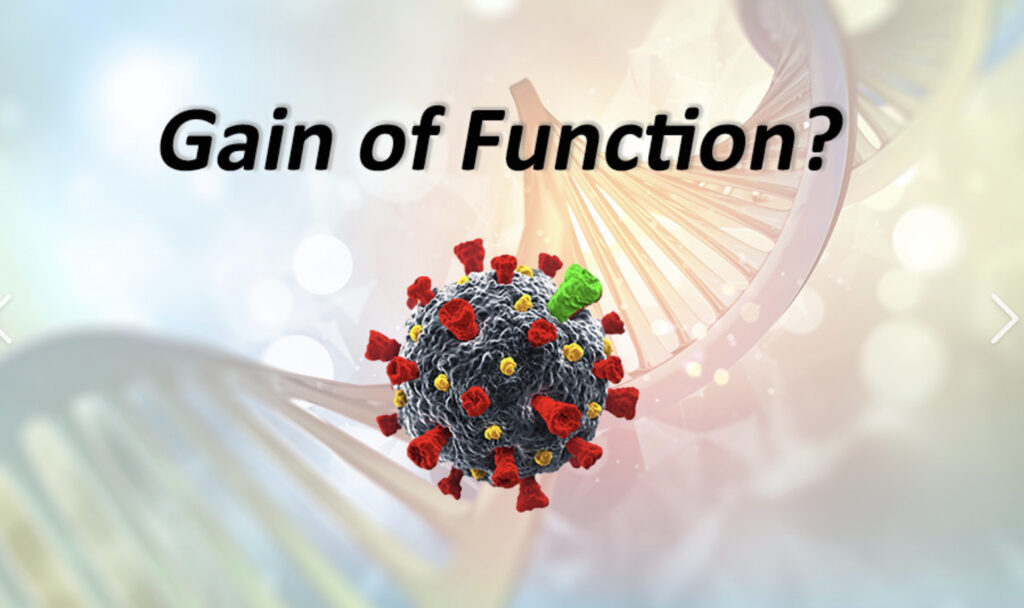
Gain-of-function (GOF) virus research is a type of lab work where scientists deliberately change a virus so it gains a new ability or becomes better at something it already does.
Think of a virus like a basic model car.
In nature, over many years, random mutations might slowly make that car faster, better at climbing hills, or able to drive on new kinds of roads.
Gain-of-function research is when scientists intentionally modify the car in a workshop—tweaking the engine or tires—so it can do one of those things right now. They do this under controlled conditions to study what happens.
What “function” means here
“Function” refers to any trait of the virus, for example:
- How easily it infects humans (or other animals)
- How well it spreads from person to person
- How severe the disease it causes becomes
- Whether it can jump from animals to people
The goal is usually to give the virus one of these improved or new traits in the lab.
Why scientists do it
Researchers use GOF experiments for several practical reasons: - To understand the exact genetic changes that make a virus more dangerous. This helps them predict how a virus might evolve in the wild.
- To test vaccines, drugs, or diagnostic tools against a stronger version of the virus before that version appears naturally.
- To study the basic biology of how viruses work (for example, how they attach to cells or evade the immune system).

In short: prepare for the worst-case natural version of a virus by creating a controlled version of it first.

These experiments are normally done only in high-security laboratories (Biosafety Level 3 or 4) with strict rules, special equipment, and oversight. The work is considered “dual-use” research—useful for public health but also potentially risky if something goes wrong (accidental release) or if the knowledge is misused.
Because of those risks, GOF work on certain dangerous pathogens has been paused, restricted, or put under extra review in various countries at different times (especially after some high-profile bird-flu experiments around 2011–2012 and again during debates about the origins of COVID-19).
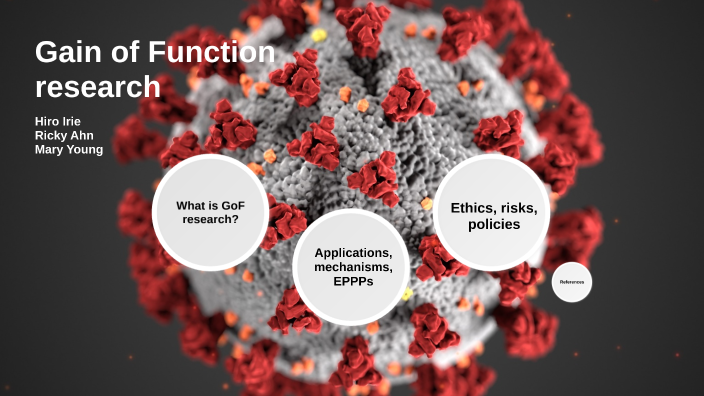
Gain-of-function virus research = scientists intentionally making a virus “better” at something (usually infection or spread) in a secure lab so they can study it, prepare defenses, and learn how evolution might work.
It is a powerful scientific tool with real benefits for pandemic preparedness, but it also carries real risks that require careful regulation.

Fauci’s Gain of Function
In Fauci’s GOF research, scientists aimed to enhance a virus’s “virulence” — its ability to cause severe disease or death – alongside making viruses more transmissible or able to infect new hosts: humans. The work is done in specialized high-containment labs under strict rules.
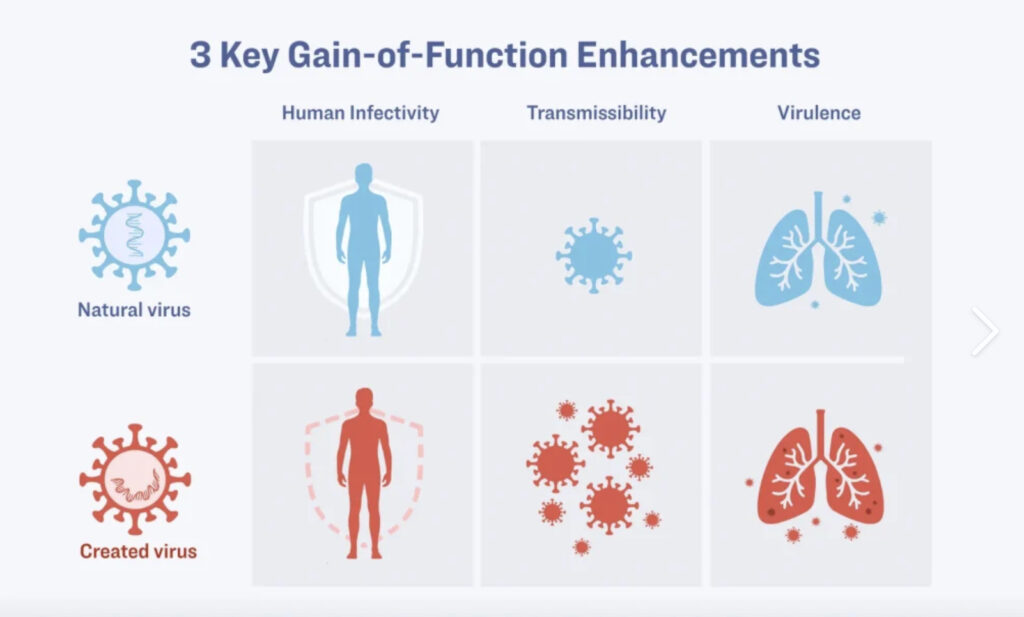
Creating or enhancing a more deadly version of a virus in a lab carries serious downsides that many scientists, ethicists, and policymakers highlight:

- Accidental release risk: Even the best labs can have human error, equipment failure, or protocol breaches. A virus engineered to be more lethal than its natural counterparts could escape and start an outbreak that is harder to control, more fatal, and potentially more resistant to existing treatments or vaccines than anything nature has produced so far.
- Dual-use danger: The same knowledge and techniques that help understand disease can, in the wrong hands, be turned into biological weapons. A deliberately more deadly pathogen is an obvious candidate for misuse by hostile states, terrorists, or other malicious actors.
- Unpredictable consequences: Viruses evolve. A lab-created “deadlier” version might interact with human immune systems, other microbes, or the environment in ways no one foresaw, creating cascading public-health disasters.
- Erosion of trust and resource diversion: High-profile GOF work (especially when controversies arise) can reduce public confidence in science and public-health institutions. It also consumes funding, talent, and lab capacity that could otherwise go toward safer research priorities such as surveillance of natural viruses, vaccine platforms, or antiviral drugs.
- Ethical red line: Intentionally generating pathogens that do not exist in nature raises deep questions about whether humans should create novel existential risks just to study them. Many argue the potential benefits (better preparedness) do not justify the downside of a single catastrophic accident.























More Stories
PsyWars: Fifth Generation Warfare and Sovereignty
COVID:19:Vaccines:Bioweapons
An Inconvenient Study
Criminal mRNA Malfeasance by the CDC